Frequently Asked Questions
I am in constant agonizing pain, will this help me?
When you are in ACUTE pain it’s too late for exercises as a cure-all. It might take several weeks before you can start using the device. It works for CHRONIC pain when used on a regular basis but it is not a miracle cure for agonizing pain.
- I am in constant agonizing pain, will this device help me?
- How long will it take for me to start seeing results? How long does the Pelvic Clock take to work?
- Who should use the Pelvic Clock® device?
- What does the Pelvic Clock® device do?
- I'm currently experiencing lower back and/or hip pain. Is the Pelvic Clock™ device safe for me to use?
- How long does the pelvic clock exercise take?
- I have scoliosis. Can I still use the Pelvic Clock® device?
- I'm overweight and have concerns about the device being the right fit for me. Does the Pelvic Clock® device come in different sizes?
- What material is the Pelvic Clock® device made of? Is it safe to use on all surfaces?
- Does the Pelvic Clock® device come in other colors?
- Can I use the Pelvic Clock® device after hip replacement surgery?
- How does the Pelvic Clock® device make exercises more effective?
- Is it normal to experience muscle soreness or pain when using the Pelvic Clock Exercise Device for the first time?
- Can I use the Pelvic Clock on my bed if I can’t get down on the floor?
- Are Pelvic Clock® exercises suitable for different types of scoliosis?
- Is the Pelvic Clock® eligible for FSA or HSA reimbursement?
Who should use the Pelvic Clock® device?
What does the Pelvic Clock® device do?
I'm currently experiencing lower back and/or hip pain. Is the Pelvic Clock® device safe for me to use?
How long does the pelvic clock exercise take?
How long will it take for me to start seeing results? How long does the Pelvic Clock take to work?
I have scoliosis. Can I still use the Pelvic Clock® device?
Yes!
I'm overweight and have concerns about the device being the right fit for me. Does the Pelvic Clock® device come in different sizes?
What material is the Pelvic Clock® device made of? Is it safe to use on all surfaces?
Does the Pelvic Clock® device come in other colors?
Can I use the Pelvic Clock® device after hip replacement surgery?
I am in constant agonizing pain, will this help me?
How does the Pelvic Clock® device make exercises more effective?
1. Elevation: 3D versus 2D
The Pelvic Clock® device keeps the pelvis 2 inches above the ground. This elevation adds a third dimension to traditional pelvic tilts. Just like 3D printers, 3D exercises are more sophisticated. For instance, they help activate and strengthen the lumbar multifidus, transversus abdominis, and internal oblique — all rarely-used, deep core muscles.2. Lumbar Traction
The Pelvic Clock® device allows for a mild lumbar traction in every direction. It also enables you to stretch the lumbar multifidus muscle, which is hard to release otherwise.3. Lumbar Stabilization
The unstable surface of Pelvic Clock® exercise device makes core exercises more challenging. The instability “wakes up” the transversus abdominis and internal oblique muscles.4. Body Awareness
Most people who have uneven hips or a tilted pelvis are unaware of the fact, but it is possible to improve body awareness through appropriate exercise. The Pelvic Clock® device creates a connection between the brain and the sacrum.The recess on the device is specially designed to cradle the triangular sacrum bone. Located on the midline of the pelvis, the sacrum is a great point of reference. Once the sacrum is positioned properly, the brain can recognize asymmetry in the pelvis better than any scanner. This accelerates the learning process of subtle and precise exercises for pelvic alignment.
Is it normal to experience muscle soreness or pain when using the Pelvic Clock Exercise Device for the first time?
1. DOMS (delayed onset muscle soreness)
If you are new to pelvic exercises, that means you haven't been using some muscles for a long time, if at all. In this case, the “second-day ache” or delayed onset muscle soreness is normal. Rest for 2 days, then resume your practice. It might take a few weeks to completely adjust.2. Overuse
If you start exercising with too much enthusiasm, you'll be sore from muscle overuse for a few days. Ice your back, rest for 2-3 days, and then start again with moderation.3. Sciatica
If you are doing exercises incorrectly, too fast, or bending too much in the wrong direction, you might irritate your sciatic nerve. Finding the direction of the movement that reduces your pain is intuitive.
The goal is to perform all of the exercises within a range of motion that does not increase your pain, with the expectation that as you use the device you will be able to gradually increase your range of motion until you are pain free. Take time to build up the routine and listen to your body. If you are experiencing pain, stop and give your lower back a little rest.
Tilting your pelvis in one direction can increase your pain, while tilting it in the opposite direction provides pain relief. For example:
If your pain is increased at the 6 o'clock position, you should feel pain relief around 12, 11, or 1 o’clock position.
If you are having trouble finding the direction of the movement that relieves your pain, please consult your physical therapist or book a Zoom consultation with a Pelvic Clock Educator.
If you feel the device is too hard for your sensitive lower back area, simply use a small folded towel on top of the device for padding. Some people need padding only for the first few weeks.Can I use the Pelvic Clock on my bed if I can’t get down on the floor?
Are Pelvic Clock® exercises suitable for different types of scoliosis?
You can safely try the basic stretches and core stability exercises. For best results, a physical therapist can help tailor the program to your individual needs.
Using the Pelvic Clock® is like tuning a musical instrument: the device provides a neutral reference point, and small, controlled movements help “tune” your muscles back toward balance.
How the Pelvic Clock® helps
- Stretching: releases tight muscles that may pull the spine into a curve
- Strengthening: activates weaker core muscles needed to support upright posture
Why body awareness matters
- With scoliosis, what feels straight is often misaligned. The Pelvic Clock® acts as a feedback tool:
- The sacral recess provides a clear midline reference
- Centering the sacrum helps you sense right–left differences in the pelvis
- This makes asymmetries easier to recognize and correct
If you are using the device for pain relief
- Move in the direction that reduces discomfort
- If one side feels tighter, spend more time stretching that side
- If one side feels unstable during core exercises, double the repetitions on the weaker side
- Avoid movements that increase pain
Listen to your body and move slowly.
Is the Pelvic Clock® eligible for FSA or HSA reimbursement?
Some customers have obtained reimbursement through their plans, but approval is never guaranteed and depends entirely on your individual FSA or HSA administrator.
If you wish to request reimbursement, the following general guidelines may help:
• Complete your purchase using a standard credit or debit card. FSA/HSA cards are often declined for products that are not pre-approved.
• Save your order confirmation or receipt for documentation. This can typically be done by selecting Print > Save as PDF in your email.
In many cases, plan administrators require a Letter of Medical Necessity (LMN) from a qualified healthcare provider. This letter should indicate that the Pelvic Clock® is intended to address a specific medical condition (for example, SI joint dysfunction, scoliosis, spondylolisthesis, or chronic low back pain) rather than general fitness or wellness use.
Final eligibility and reimbursement decisions are made solely by FSA/HSA administrators. Requirements vary by plan and may change over time, so we recommend confirming coverage rules directly with your provider before purchasing.




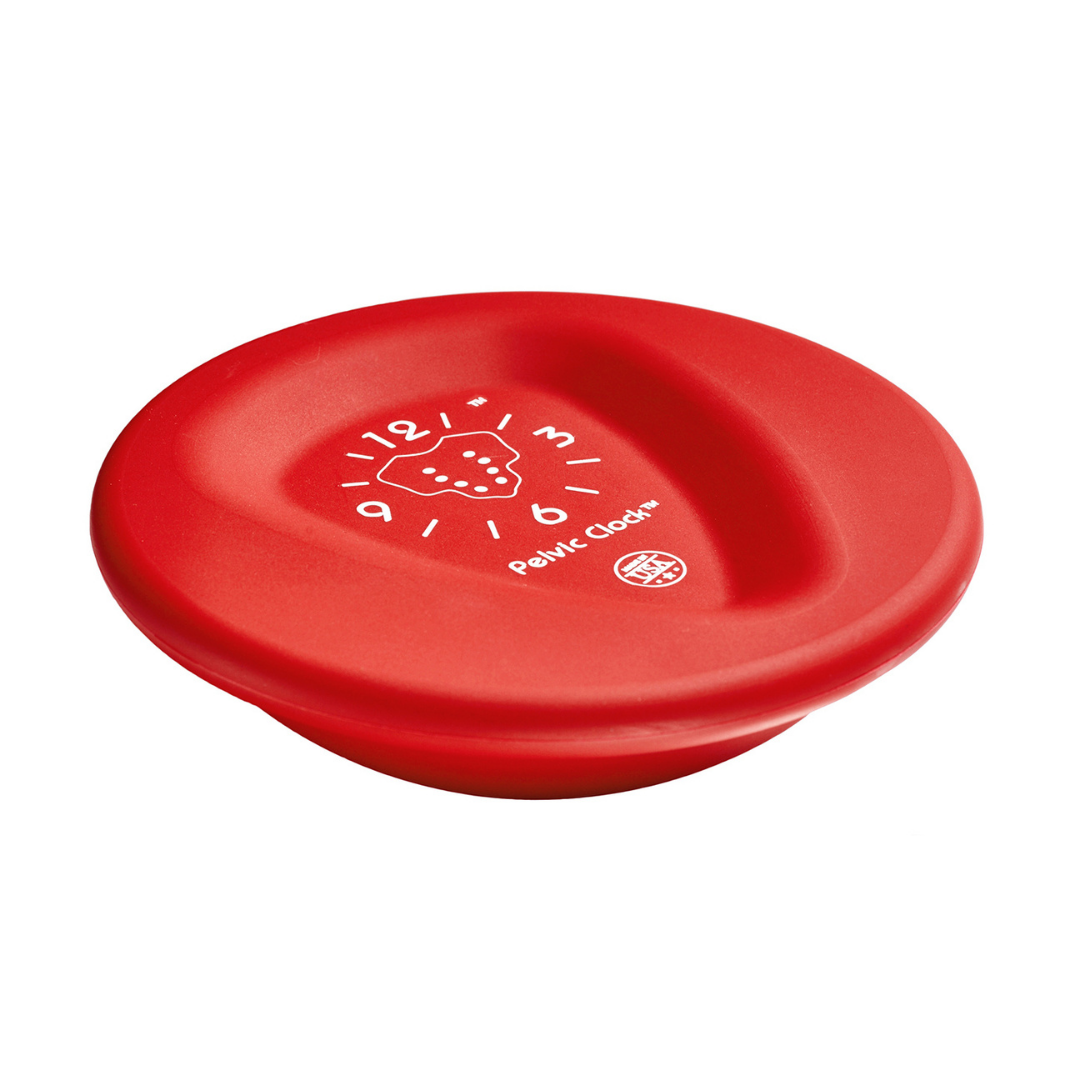
Manufactured in the USA, the Pelvic Clock® is a portable exercise tool for the hips and lower back. It is recommended for stretching and core stability workouts designed to relieve chronic pain associated with sacroiliac dysfunction, scoliosis, piriformis syndrome, lumbar spinal stenosis, and other related conditions.
Size: 6.5" x 2". Weight: 0.75 lbs.