Posture Correction Starts with Exercises for Your Pelvis
Igor Gershengorin
By Yana Blinova, MS, Inventor of Pelvic Clock® Exercise Device, Former Olympic Coach.
Most people assume that poor posture is simply a matter of slouching or having a forward head position. However, these are merely symptoms. The underlying issue often begins much lower — at the pelvis.
The pelvis serves as the foundation of your spine. If this foundation tilts or shifts, your whole body compensates—your spine curves or rotates, and your shoulders can become uneven or rounded.
Just as you wouldn’t build a house on a crooked foundation, correcting posture requires addressing pelvic alignment first. Achieving a neutral, balanced pelvis is the first step towards a lasting improvement in posture.
How a Tilted Pelvis Affects Your Posture
Your pelvis plays a key role in how your spine aligns and how your body moves.
A tilted or rotated pelvis can affect posture in four main ways:
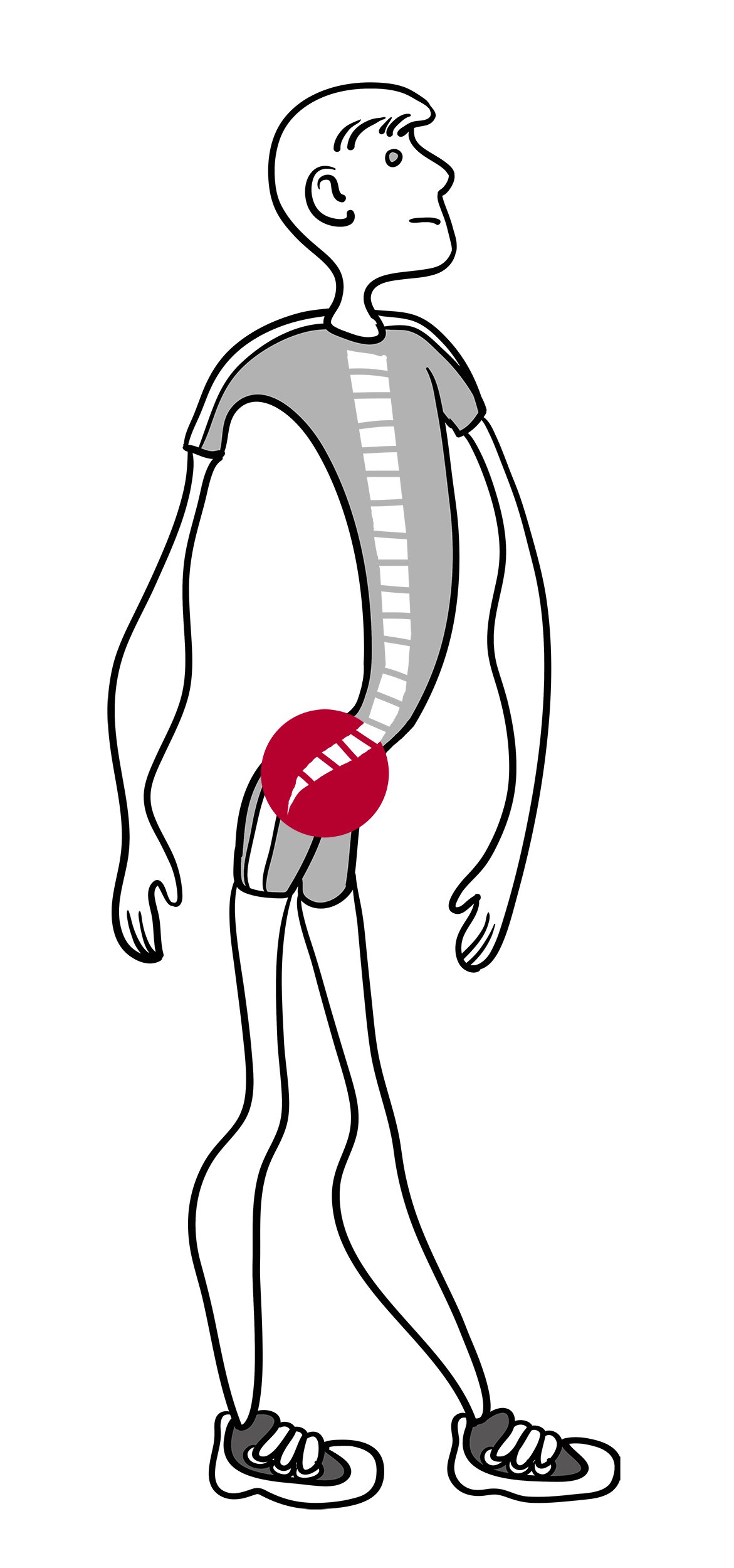
Anterior Pelvic Tilt
The front of the pelvis drops, increasing the arch in the lower back (lumbar hyperlordosis).
Common Signs
“Donald Duck butt”
Abdominal protrusion (“belly pooch”)
Tight hip flexors
Weak abdominals
Compression at L4–L5 and L5–S1
Chronic lower back pain
Posterior Pelvic Tilt
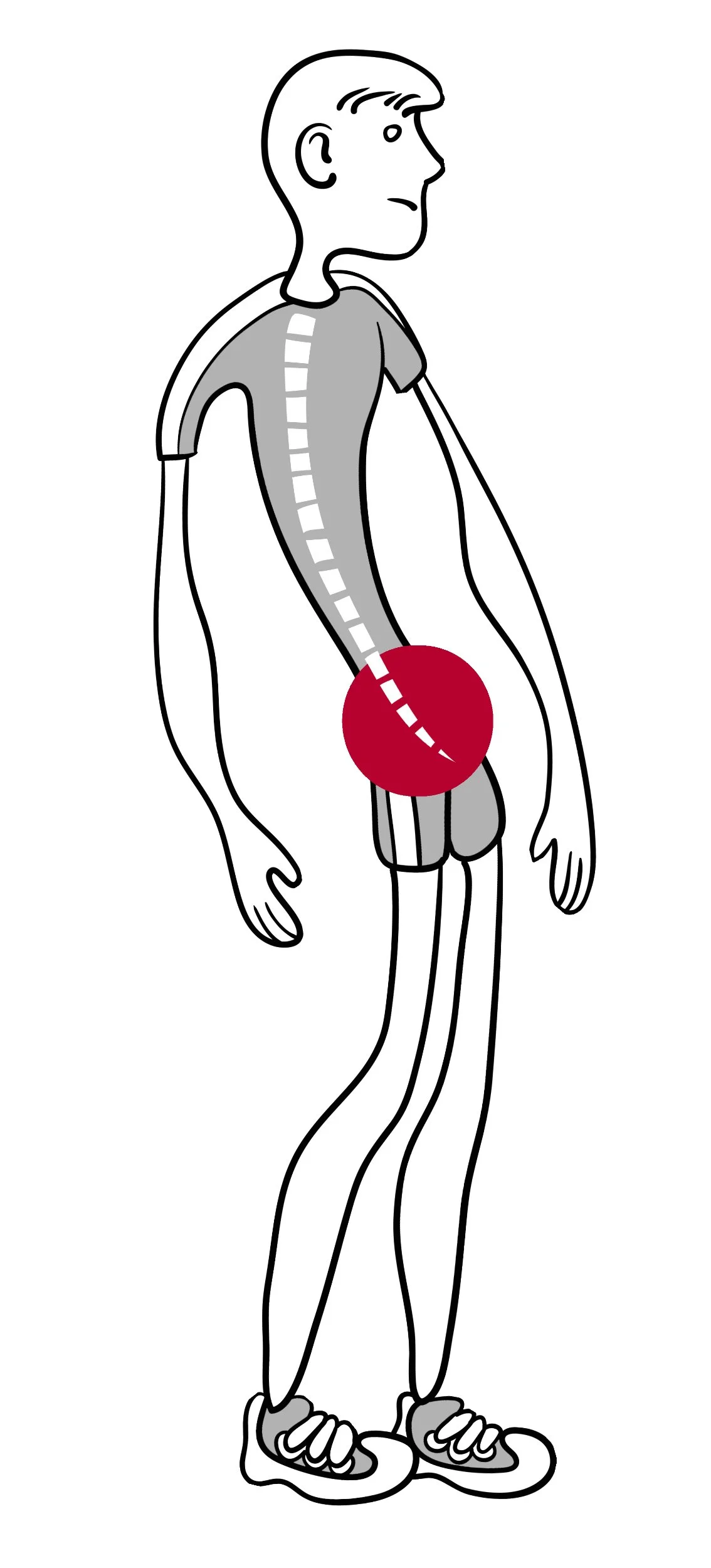
The back of the pelvis tucks under, reducing the natural lumbar curve.
Common Signs
Flat back posture
Swayback posture
Increased thoracic kyphosis
Hunched or slouched spine
Tight abdominals
Weak hip flexors
Flat buttocks
Stiff lower back
Dull ache around the tailbone
Lateral Pelvic Tilt
The pelvis drops or lifts to one side, leaving one hip higher than the other. This creates a sideways curve in the spine.
Common Signs
Hip hike
Tight QL muscle on one side
Uneven shoulders
Asymmetrical shoulder blades
Lateral head tilt
C-shaped scoliosis
Functional leg-length discrepancy
One-sided low back pain
Sacroiliac (SI) joint pain
Unilateral knee or ankle pain
Shoulder tension
Headaches due to neck strain
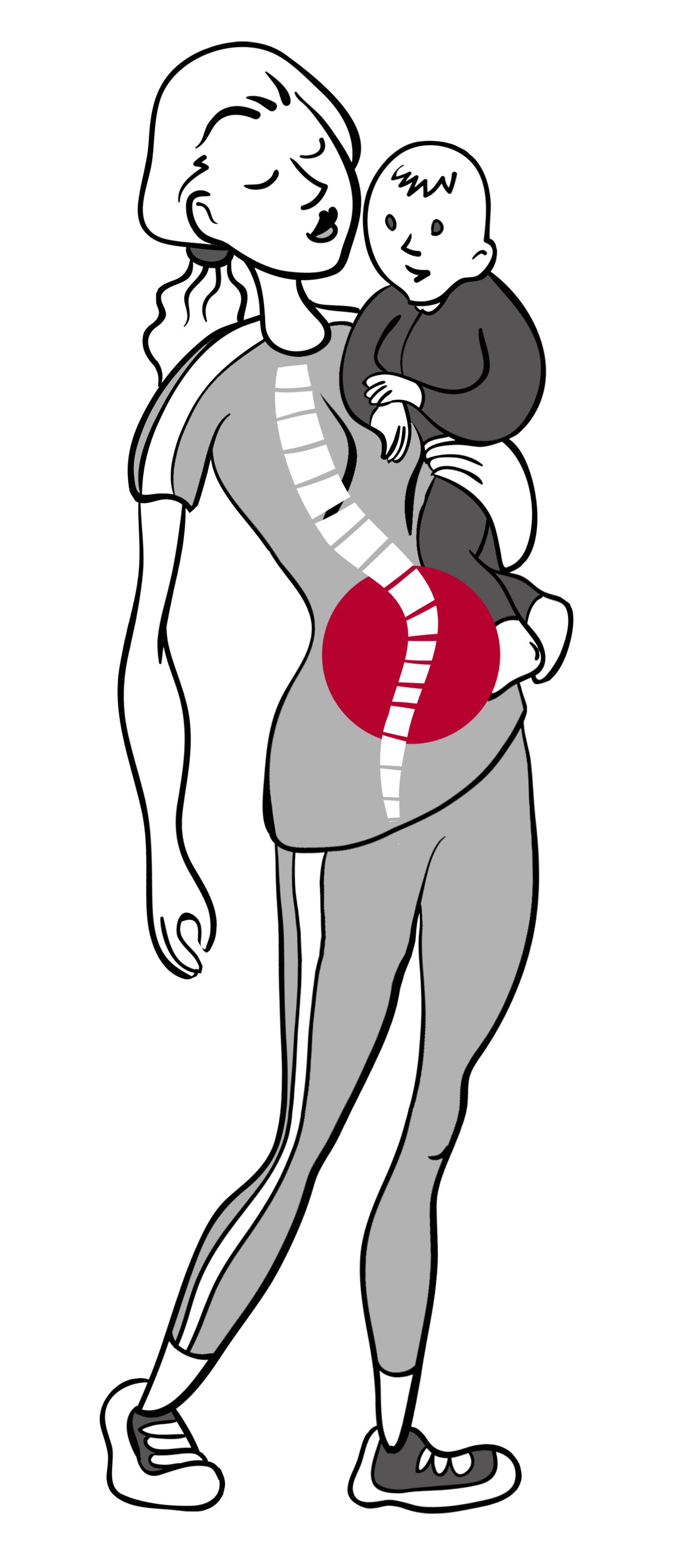
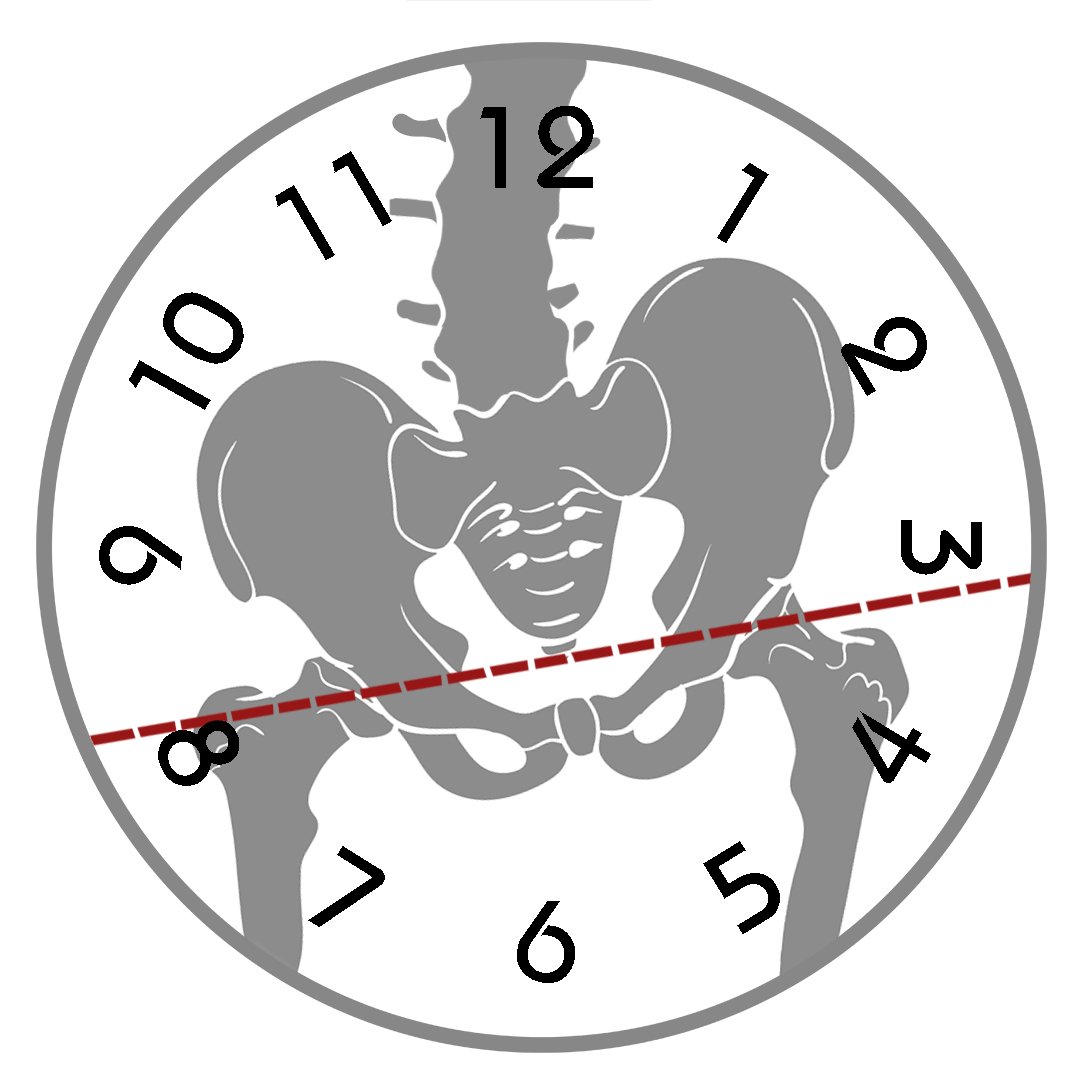
Twisted or Rotated Pelvis
When the pelvis rotates along its vertical axis, one side tips forward while the other tips back. At the same time, one hip turns outward while the other turns inward.
Common Signs
S-shaped scoliosis
Pelvic torsion
Spinal rotation
Functional leg-length discrepancy
Unstable SI joint
Tight piriformis
One-sided hip or buttock pain
Limp or compensatory walking pattern
One-sided shoulder stiffness
One-sided neck stiffness
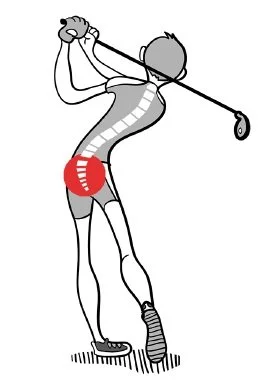
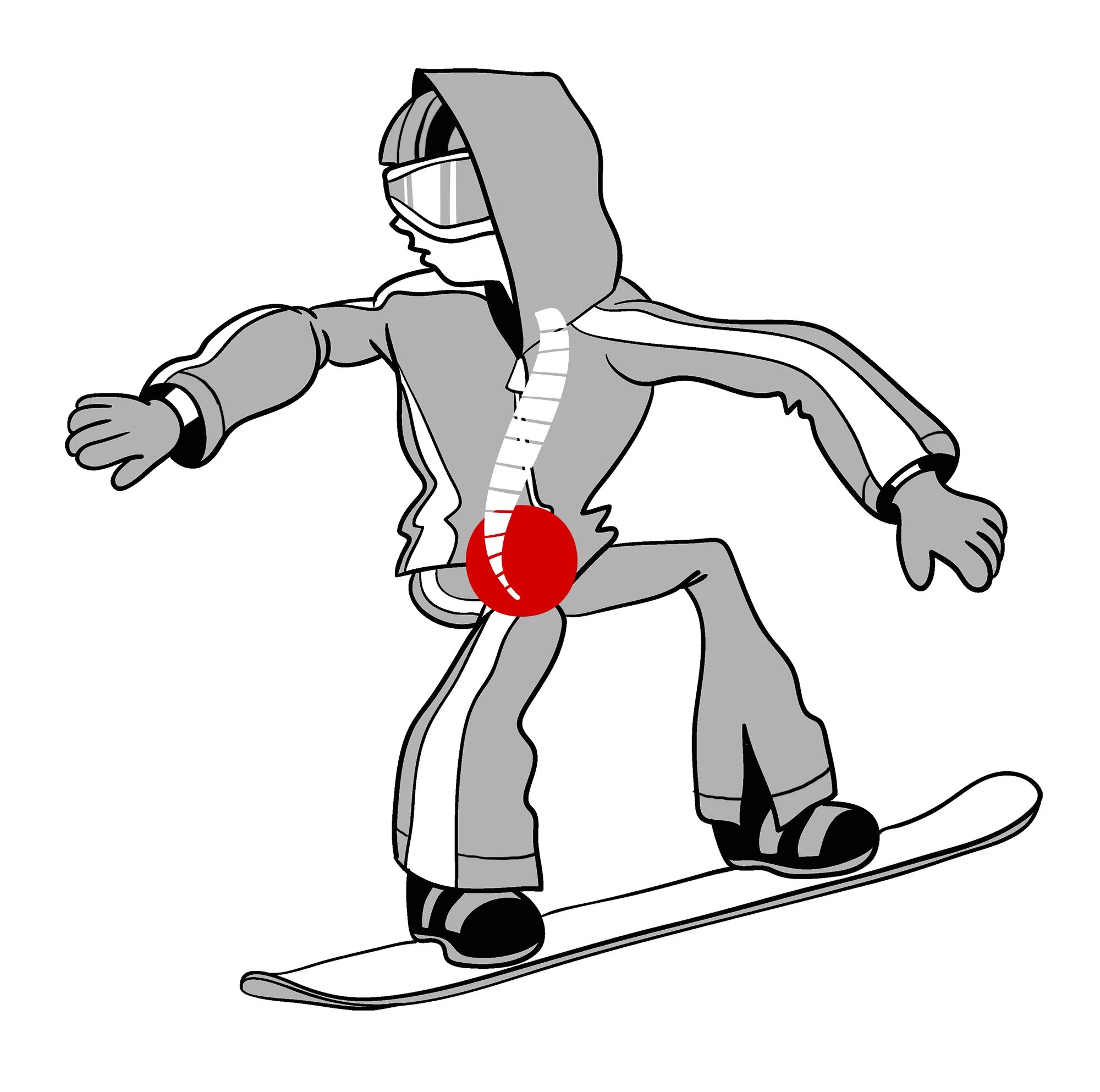
A misaligned pelvis affects many core muscles — including the iliopsoas, quadratus lumborum, piriformis, obliques, and pelvic floor. Some of these muscles tighten and shorten, while others overstretch and weaken.
The good news is that you can restore muscle balance through targeted exercises.
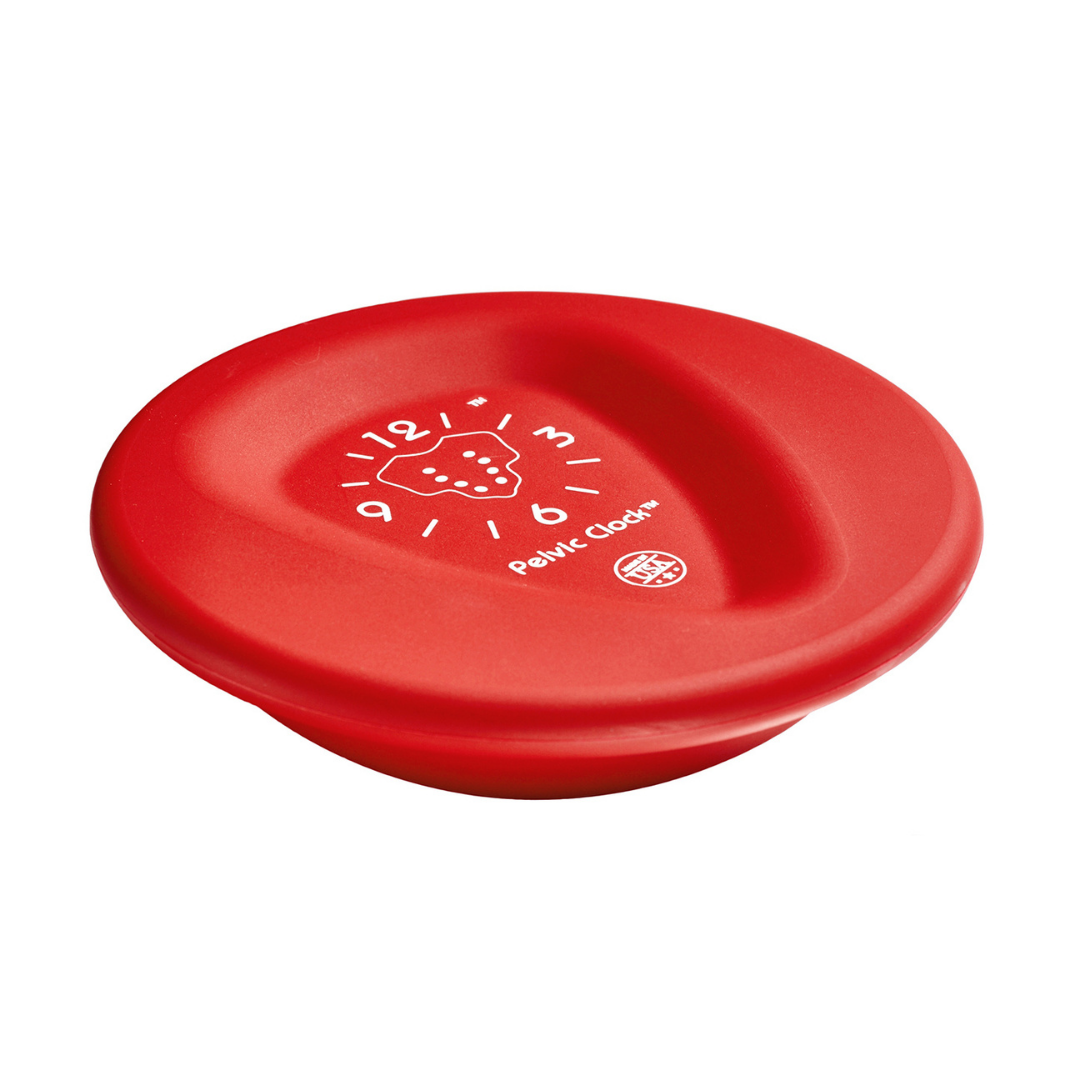
How Pelvic Clock® Exercises Help Correct Posture
Pelvic Clock® workouts improve body awareness and strengthen the deep core muscles that stabilize the pelvis and spine.
By guiding you through precise movements, the Pelvic Clock® helps restore symmetry and develop the neuromuscular control essential for maintaining healthy posture.
Which Pelvic Clock® Exercises Are Right for My Posture?
First, identify your type of pelvic misalignment.
If you don’t have a healthcare provider guiding you, review the descriptions above, then download the free Pelvic Clock® workout PDF for your specific case.
Below is one sample exercise for each type of misalignment to help you get started.
Anterior Pelvic Tilt
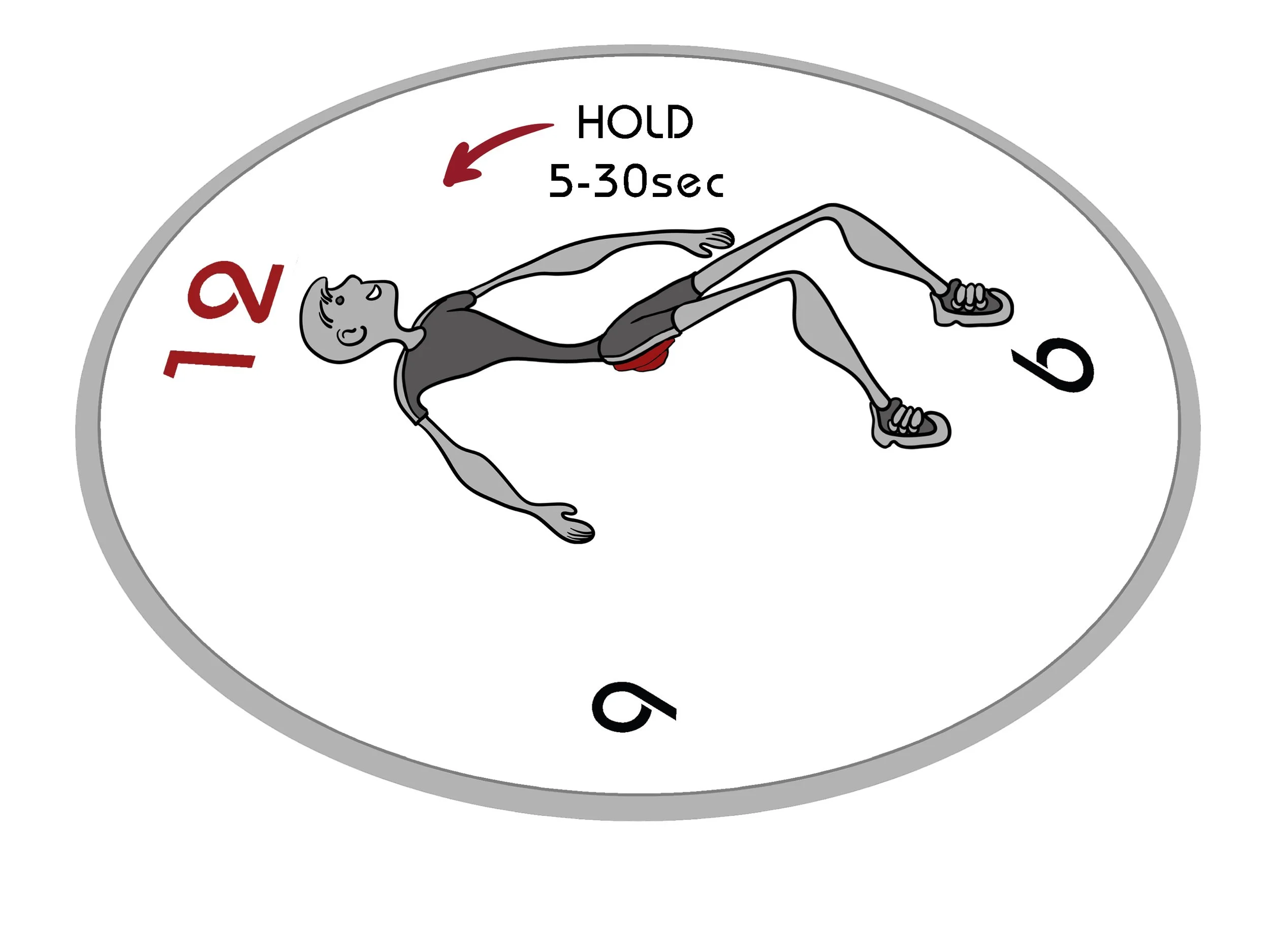
Exercise: “12–HOLD”
Exhale and gently tilt your pelvis backward toward the 12 o’clock marker (toward your head).
Hold for 5 seconds without breathing, pressing your lower back into the floor.
Inhale and return to neutral.
Repeat 10 times.

Posterior Pelvic Tilt
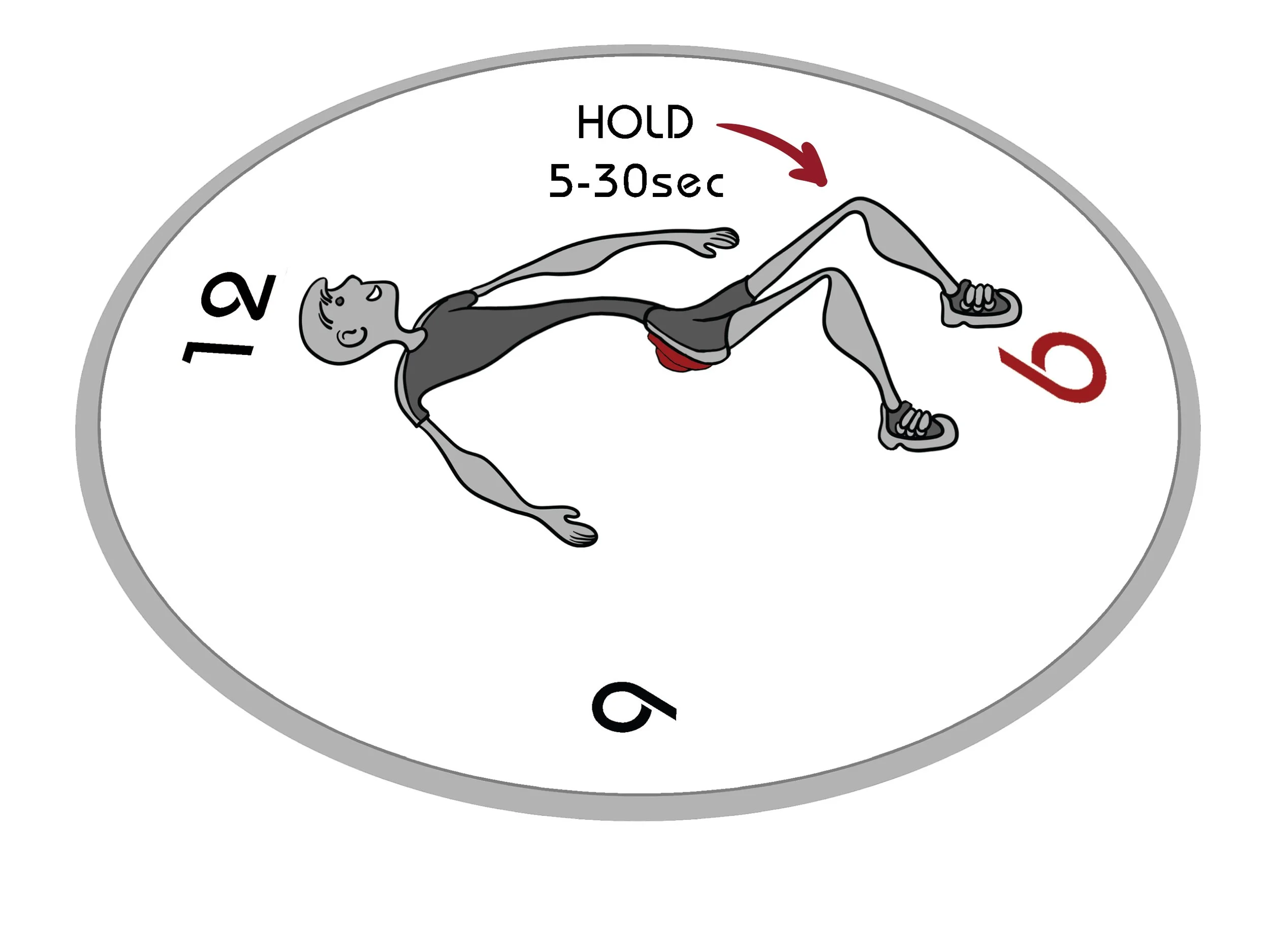
Exercise: “6–HOLD”
Inhale and tilt your pelvis forward toward the 6 o’clock marker (toward your feet).
Keep your lower back lifted off the floor during the hold.
Hold for 5 seconds.
Exhale and return to neutral.
Repeat 10 times.

Lateral Pelvic Tilt
Side Stretch
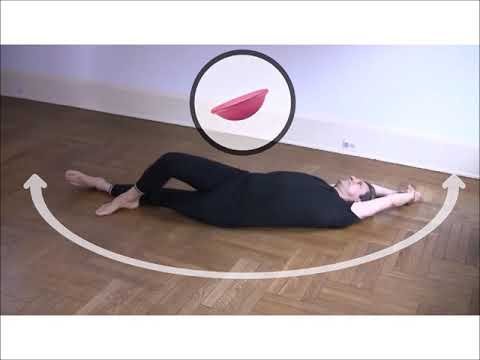
Lie on your back with the Pelvic Clock under your sacrum, legs straight.
Reach both arms overhead and hold your right wrist with your left hand.
Pull your right arm to the left to create a half-moon shape through your body.
Tilt your pelvis to the right and take 5 deep breaths.
Switch sides: hold your left wrist with your right hand, stretch to the right, tilt your pelvis to the left, and take 5 deep breaths.

Twisted Pelvis
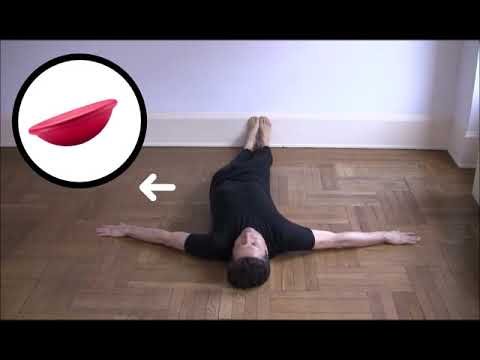
Exercise: “3–9” With Feet on the Wall
Lie on your back with your legs straight, your feet resting flat against a wall, heels on the floor.
Keep your arms wide open and your upper back grounded.
Drop your left hip toward the floor to rotate your pelvis left.
Hold for 15–30 seconds, then return to center.
Drop your right hip to rotate your pelvis right and hold for 15–30 seconds.
Compare the two sides.
Repeat the stretch on the tighter side.
This time, hold the stretch for up to 3 minutes.